
But More Clarity Needed to Improve Mayor-Council Relations
by Linwood Norman
City charters, which provide rules of governance for local government, may be revised with the best of intentions, but once those changes take effect, the cracks and crevices may begin to appear.
Such was the case for Richmond, Virginia.
In 2005, Richmond became the first city in Virginia to have a “strong mayor” form of government. Some viewed the city’s transition to this model of local government as a “political experiment in progress.” The goal was to promote greater efficiency, effectiveness and transparency in running the city. Now, on the eve of the 20th anniversary of its charter, Richmond remains the only city in Virginia with a strong mayor system.
Though Richmond’s charter was revised to establish the mayor’s role as the city’s chief executive officer and the city council as the legislative branch, the task fell short in clearly outlining all of the aspects of how the strong mayor system would operate.
Richmond’s new form of government brought fundamental changes that transferred additional power to the mayor, who served as the official elected citywide who directly reported to – and was held accountable by — the people.
In many respects, Richmond’s revised charter strengthened the mayor’s position in overseeing the operation of local government. He obtained line-item veto authority for the city’s annual budget (subject to a two-thirds override by city council), the ability to hire and fire top city officials through the chief administrative officer, and also had the authority to allocate funding to the school system within specific budget categories—such as instruction, administration, and facilities—for greater emphasis on academic performance and operational efficiency.
Richmond’s first strong mayor was L. Douglas Wilder, who became the nation’s first elected Black governor in 1990 and returned to public service in 2005 following his landslide election as mayor with nearly 80% of the vote. Wilder and city council frequently were at odds, and their battles were played out regularly in the newspaper during the mayor’s four years in office.
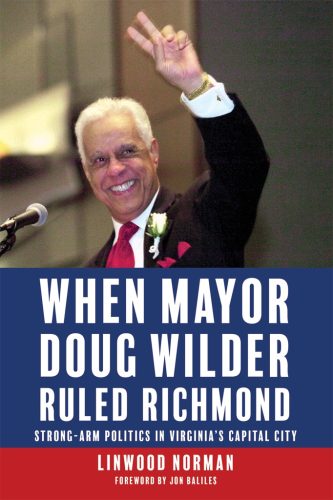
The turmoil of Richmond’s transition to a new model of government is examined in my new political biography titled, When Mayor Doug Wilder Ruled Richmond: Strong-Arm Politics in Virginia’s Capital City.
The book describes the types of problems that resulted when an ill-defined city charter has not been amended to smooth out the issues. Lacking specific detail, some sections of Richmond’s charter were left open to interpretation, which led to inevitable legal disputes between the mayor and council.
When Mayor Doug Wilder Ruled Richmond is a textbook example of the unexpected results that can occur when changes are made to a city charter, according to Harry Black, a former deputy chief administrative officer under Mayor Wilder who is now the city manager in Stockton, California.
“The book highlights the gnarly effects of city charter reviews and changes that invariably lead to unintended consequences, particularly with respect to the distribution of executive authority. In Richmond’s case, just enough fragments of executive authority remained with the city council,” said Black. “This muddied the waters between the roles of the city’s executive and legislative branches, which made cooperation between the two branches of city government extremely difficult.”
For example, the city attorney typically reports to the mayor in a strong mayor system, but in Richmond, the city attorney is hired by and reports (and is held accountable) to the council even though the charter states the city attorney also represents the mayor and his administration, Black noted.
Wilder and city council battled over issues such as who held the authority to execute rental agreements as well as hire and fire city employees. The cost of hiring outside lawyers to represent them exceeded $1 million by the time Wilder left office.
Wilder’s vision for a strong mayor form of government never reached its full potential. He grew frustrated that rules of authority were never fully defined between the mayor and council under the city charter. Still, he believed in the inherent advantages of a strong mayor system.
Explained John C. Watkins, a former Virginia state senator who sponsored the strong mayor legislation in the Virginia General Assembly, “Wilder understood the politics of city government and could identify the real issues and solutions, even when his candor and practical approach many times flew in the face of the control biases held by council and the ‘establishment.’ Wilder never quit in supporting the need for ‘strong mayor’ governance in Richmond.”
Despite the need to revise the charter, the council appears to be in no rush. The Richmond City Charter Commission produced a lengthy report in 2023 with dozens of recommendations designed to improve local government functioning. To date, however, council has not proposed any charter revisions for action by the General Assembly.
Linwood Norman is the author of When Mayor Doug Wilder Ruled Richmond: Strong-Arm Politics in Virginia’s Capital City.

Leave a Reply
You must be logged in to post a comment.